

Start your day the French way, discover the best traditional and modern French breakfast foods, from classic croissants and tartines to regional pastries and healthy favorites. Get easy recipes, serving tips, and authentic ideas for Parisian and country-style breakfasts.
CONTENT SUMMARY:
Table of Contents
The Core of French Breakfasts
A French breakfast reflects simplicity and elegance. It emphasizes quality over quantity, focusing on fresh, flavorful ingredients. Bread, pastries, spreads, and beverages create the foundation of French breakfast foods. These elements are carefully chosen to provide a balanced and satisfying start to the day.
Classic Pastries and Breads
French breakfast foods aren’t just about sustenance, they highlight the country’s tradition of baking perfection and quality.
- Croissant: Flaky, golden pastry with a melt-in-your-mouth texture, best freshly baked and paired with coffee or hot chocolate.
- Pain au Chocolat: Rolled croissant dough with rich dark chocolate sticks in the center; always a favorite at Parisian cafés.
- Pain aux Raisins: Spiraled pastry with pastry cream and juicy raisins, an irresistible morning treat.
- French Baguette Tartine: Sliced baguette (toasted or not), topped with salted butter and seasonal jam, or sometimes mild cheese for a savory option.
Did you know most French people eat viennoiseries only on weekends, saving tartines for everyday?
Tip: The secret is freshness, always choose the best bread and pastries your bakery has to offer.
Perfect Pairings: Butter, Jam, and Spreads
Quality is key.
- Butter: For true flavor, use lightly salted or cultured French butter (look for AOP on the label).
- Fruit Preserves: Choose low-sugar, high-fruit jams like Cassis (blackcurrant) or classic apricot.
- Nut & Chocolate Spreads: A thin layer of hazelnut-chocolate spread or praline for a sweet upgrade, loved by children and grown-ups alike.
These pairings elevate the simplicity of bread and pastries, turning a light breakfast into a memorable start to the day.
Signature Beverages of a French Morning
No French breakfast is complete without:
- Café au Lait: Equal parts strong coffee and hot steamed milk, sipped from a wide bowl.
- Chocolat Chaud: Rich, real chocolate melted into hot milk, served thick enough for a spoon to stand.
- Fresh Orange Juice: Pressed just before serving, tart, sweet, and balancing for pastries.
These beverages complete the meal, offering comfort and satisfaction with every sip.
Recipes for French Breakfast Favorites
Bringing French breakfast to your home is easier than you think, try these effortless, authentic recipes for a memorable Parisian or countryside morning. Each one includes practical tips and ingredient swaps to suit any kitchen.
Pain au chocolat recipe:
Pain au Chocolat is perhaps the most beloved French pastry after the croissant. While making it from scratch requires patience and precision, the reward is a warm, chocolate-filled pastry that tastes infinitely better than store-bought versions. Homemade pain au chocolat delivers that perfect combination of flaky layers and melting chocolate that captures the essence of a true French morning.
Ingredients:
Dough
- Water, milk or a mix of both measuring 1 and 1 half cups which equals 340 grams
- Granulated sugar measured at one quarter cup or 50 grams
- All purpose flour from King Arthur totaling 4 and one half cups or 540 grams
- Instant yeast in the amount of 2 and one half teaspoons
- Table salt measured at 2 and one half teaspoons which is 15 grams
- Softened unsalted butter equal to 4 tablespoons or 57 grams
Butter block
- Cold unsalted butter measured out to 24 tablespoons or 340 grams
Chocolate filling
- Pain au Chocolat sticks ranging from 16 to 32 pieces which equals 85 to 170 grams depending on how many you want in each roll
Glaze
- One large egg beaten with a small pinch of salt
Steps:
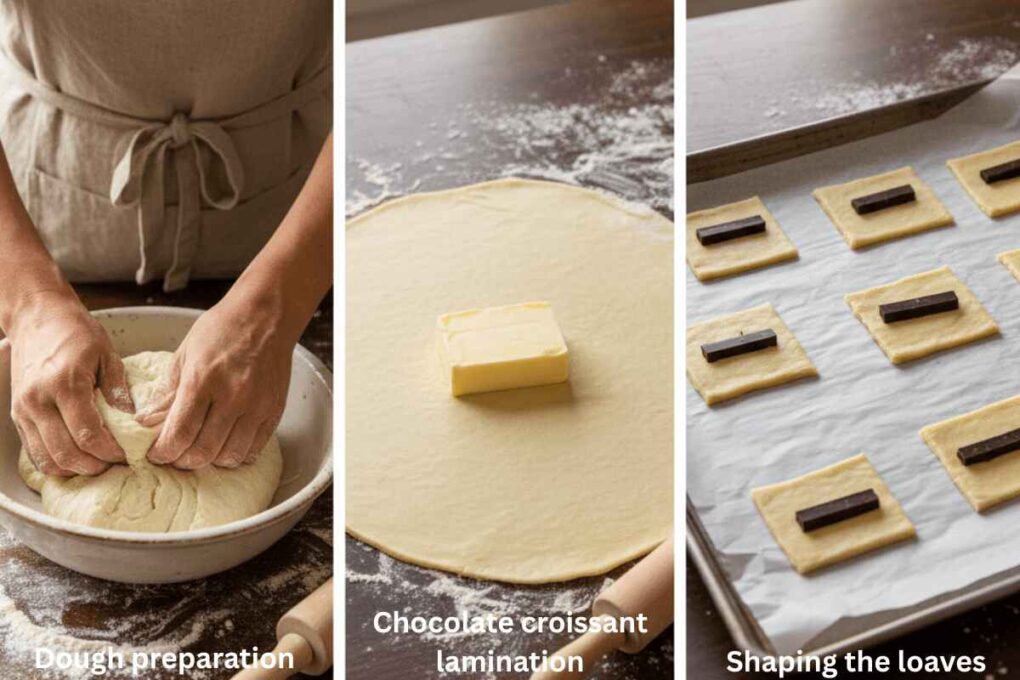
- In a large bowl, combine the water, sugar, 2 cups (240g) of the flour, yeast, salt, and butter. Mix until the ingredients look mostly blended.
- Add the rest of the flour and stir until the dough pulls away from the bowl. Turn it out and knead just until it starts to smooth. Don’t overwork it.
- Place the dough in a lightly greased bowl. Cover and let it rise for about 1 hour, until puffy.
- (Bread machine option) If using a bread machine with at least a 1 1/2-pound capacity, put all ingredients in the bucket, choose the dough/manual setting, and press start.
- After the hour at room temperature, cover the bowl again and refrigerate the dough for 8 to 16 hours. Overnight works perfectly.
- To prepare the butter: When the dough is almost ready to come out of the fridge, slice each of the three sticks of butter in half lengthwise. Place all six pieces on a floured sheet of wax paper or plastic wrap.
- Dust the butter with a little flour, cover it with another sheet, and gently tap it with a rolling pin until soft. Roll it out into an 8″ x 8″ square.
- To assemble: Remove the dough from the fridge and place it on a lightly floured surface. Roll into a 12″ square.
- Put the butter square in the center at a 45° angle so it looks like a diamond inside the dough. Fold the four corners of dough into the center to seal the butter.
- Roll the dough into a 10″ x 20″ rectangle. Fold one third toward the center, then fold the remaining third over it (letter-style).
- Turn the dough 90° and roll it again into a 10″ x 20″ rectangle.
- Fold the short edges toward the middle until they meet. Then fold the dough in half along that seam like closing a book. Turn it 90°.
- Wrap the dough in plastic wrap dusted with flour and refrigerate for at least 8 hours or up to 24 hours.
- To finish: Remove the dough from the refrigerator, cut it in half, and place one half back in the fridge.
- Roll the other half into a generous 8″ x 24″ rectangle. Cut into eight pieces measuring 4″ x 6″. Add one or two chocolate sticks at one end and roll up each piece. Place seam side down on a greased or parchment-lined baking sheet, press gently on top to flatten, and repeat. Cover and let rise about 1 hour until puffy.
- Near the end of rising, heat the oven to 425°F. Brush the rolls with the egg glaze and bake for 18–20 minutes until golden. Let them cool slightly so the structure sets. Store leftovers wrapped at room temperature or freeze for longer keeping.
Prep Time: 1 hour • Bake Time: 18–20 minutes • Total Time: 1 hour 18 minutes • Yield: 16 rolls
Tips:
For a deeper taste and a slightly richer color, swap out 1/2 cup (53g) of the all-purpose flour and replace it with the same amount of medium rye flour.
Tartine: The Quintessential French Toast
Slice a fresh baguette or pain de campagne in half and toast it lightly. Slather with French butter, a generous layer of seasonal jam or creamy cheese, and finish with sliced strawberries, figs, or just a sprinkle of sea salt. For a heartier tartine, layer smoked salmon, avocado, or soft brie.
Quick tip: Tartines are effortlessly chic and endlessly customizable, perfect for busy mornings but still truly French.
For an even heartier version, you can add sliced avocado, smoked salmon, or soft cheese like brie. Tartines are proof that French breakfast foods can be as diverse as your creativity allows.
Brioche Pain Perdu (Classic French Toast):
Use slightly stale brioche or country bread. Soak thick slices in a mixture of eggs, milk, and vanilla extract, then fry in butter till golden. Serve warm, sprinkled with powdered sugar, seasonal berries, or a drizzle of honey.
Variation: For a savory twist, use rustic country bread and brûlée the top with a little sugar and a kitchen torch.
Ingredients:
- 4 thick slices of brioche bread
- 2 large eggs
- ½ cup milk
- 1 teaspoon vanilla extract
- Butter for frying
- Maple syrup, powdered sugar, or fresh fruit (for serving)
Steps:
- First, whisk the eggs, milk, and vanilla extract in a shallow dish until fully combined.
- Dip each slice of brioche into the custard mixture, ensuring both sides are coated evenly.
- Heat butter in a skillet over medium heat and fry the bread slices until golden brown on both sides.
- Finally, serve warm with a drizzle of maple syrup, a dusting of powdered sugar, or a handful of fresh berries.
This dish is perfect for leisurely weekend breakfasts or special occasions.
Tips for Perfect Results
To make these recipes shine, follow these simple tips:
- Use Fresh Ingredients: High-quality butter, bread, and spreads are essential for authentic flavors.
- Be Patient: Recipes like croissants require time for resting and folding the dough. This step is crucial for achieving flaky layers.
- Experiment: While tradition is key, don’t hesitate to customize your tartines or pair French toast with unexpected toppings like nuts or yogurt.
By practicing these techniques, you’ll bring the magic of French breakfast foods to your own kitchen.
Explore French Breakfast by Region:
France’s regions contribute distinctive flavors and traditions to French breakfast foods. While the staples like croissants and baguettes are universal, local specialties add variety and depth. By exploring these differences, you’ll see how French breakfasts adapt to the ingredients and cultures of each area.
- Provence: Enjoy fougasse (olive bread) and tartines with lavender honey for a sun-soaked, light start to the day.
- Brittany: Treat yourself to buckwheat galettes (savoury crepes with egg or cheese) and the famous kouign-amann, a caramelized butter pastry.
- Alsace: Taste soft bretzels with butter, or indulge in kugelhopf, a brioche-like cake with raisins, often paired with strong coffee.
- Paris: Sip café au lait and enjoy a simple tartine or croissant at a street-side café, minimalist, yet refined.
Looking Ahead: A Blend of Old and New
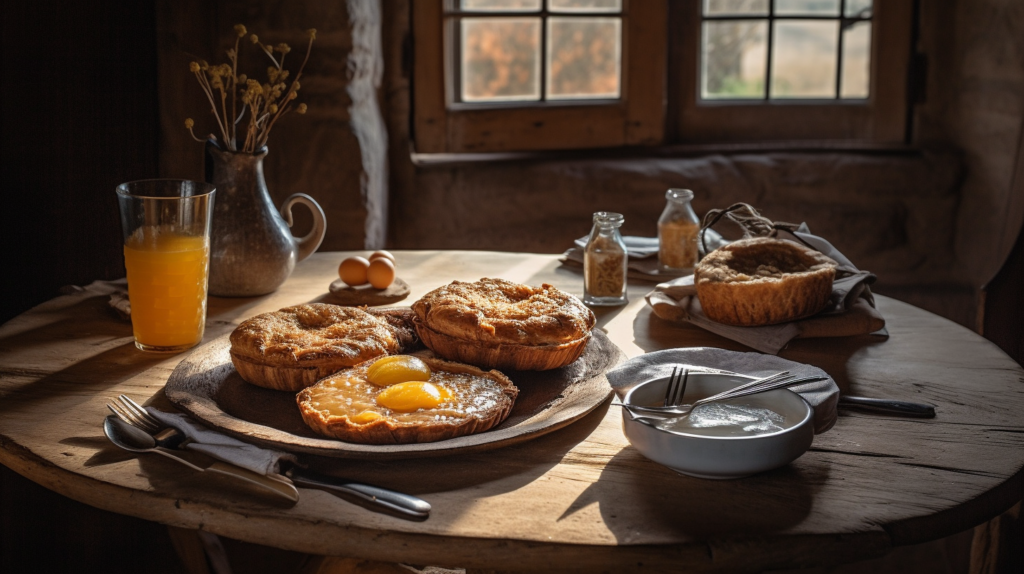
Across France, traditional breakfasts remain beloved, but modern twists are also emerging. For example, plant-based milk and healthier spreads are becoming more common, blending tradition with contemporary trends. This ensures that French breakfast foods continue to inspire people everywhere.
For more on France’s breakfast heritage and regional traditions, visit the official France tourism guide.
Modern and Healthy Twists on French Breakfast Foods
While traditional French breakfast foods are beloved, modern trends have introduced healthier and more diverse options. These adaptations focus on nutrition, sustainability, and catering to changing dietary preferences, making French breakfasts even more versatile.
Incorporating Whole Grains
Many people are swapping white bread and pastries for whole-grain options. For example, whole-grain baguettes and croissants provide more fiber and nutrients while maintaining their delicious flavor. These alternatives pair perfectly with traditional spreads like fruit jams or almond butter.
Transition: Alongside healthier bread options, plant-based ingredients are also gaining popularity.
Plant-Based Alternatives
French breakfasts are evolving to include plant-based choices. For instance:
- Non-Dairy Milks: Oat, almond, or soy milk can replace traditional dairy in café au lait or hot chocolate.
- Vegan Butter: Plant-based spreads now provide a creamy and flavorful alternative to traditional butter.
These changes make French breakfast foods more inclusive while retaining their iconic taste.
Transition: At the same time, healthier versions of pastries are being embraced.
Low-Sugar Pastries and Toppings
For those seeking lighter options, bakers are creating croissants and pain au chocolat with reduced sugar and whole-grain flours. Similarly, spreads made from natural ingredients, such as sugar-free fruit preserves, have become popular for adding sweetness without extra calories.
Transition: In addition to these modern adjustments, portion control has also become a key focus.
Balanced Portions for Busy Mornings
Modern French breakfasts embrace whole-grain breads, vegan or plant-based spreads, and naturally sweetened jams. A tartine with avocado or nut butter replaces butter for some; oat milk joins coffee instead of regular milk. French bakeries now offer croissants made with buckwheat or spelt flour, and less sugary fruit compotes for balance.
For more ideas on creating nutritious morning meals, explore our guide to healthy breakfast options that complement traditional French recipes.
Frequently Asked Questions about French Breakfast Foods
1- Do French people really eat pastries every day for breakfast?
No. Most French people eat pastries (croissants, pain au chocolat) only on weekends or as occasional treats. On weekdays, a simple tartine with jam or cereal is more common. Pastries are saved for leisurely Saturday/Sunday mornings or café visits.
2- Why is dipping bread in coffee so common in France?
Dipping bread into coffee (or hot chocolate) is a cherished French habit, often started in childhood. It’s practical, economical, and helps soften stale bread. This tradition is so ingrained it’s considered completely normal and acceptable in France.
3- Is breakfast the main meal in France, or is lunch?
Lunch is the main meal in France, not breakfast. The French keep breakfast light and simple (bread, pastry, coffee) to leave room for a hearty midday meal. This is why savory dishes like eggs and bacon are saved for lunch or dinner, not breakfast.
4- How is brunch (le brunch) different from traditional French breakfast?
Le brunch is a modern, growing trend in France combining sweet and savory items, omelets, quiches, avocado toast, French toast, and bagels with salmon. Traditional French breakfast remains sweet and carb-focused, but brunch offers international, heartier options, especially on weekends at trendy cafés.
Conclusion
Whether you’re craving flaky pastries, rustic tartines, or healthy, modern spins, French breakfast foods transform mornings into something special. Mix classic recipes with regional delights for an at-home French experience, simple, delicious, and très chic!
PrintPain au chocolat recipe
- Total Time: 1 hour 18 minutes
- Yield: 16 rolls
Description
Flaky homemade pain au chocolat with buttery laminated dough, rich chocolate sticks, and a golden egg-washed crust. This bakery-style recipe creates crisp layers with a soft, tender center.
Ingredients
Water, milk, or a mix totaling 1 1/2 cups (340g)
1/4 cup granulated sugar (50g)
4 1/2 cups all-purpose flour (540g)
2 1/2 teaspoons instant yeast
2 1/2 teaspoons table salt (15g)
4 tablespoons softened unsalted butter (57g)
24 tablespoons cold unsalted butter (340g)
16 to 32 pain au chocolat sticks (85 to 170g)
1 large egg beaten with a pinch of salt
Instructions
1. In a large bowl, mix water, sugar, 2 cups of the flour, yeast, salt, and butter until mostly blended.
2. Add the remaining flour and stir until the dough pulls from the bowl. Knead gently until just smooth.
3. Place dough in a lightly greased bowl, cover, and let rise for 1 hour until puffy.
4. For bread machine users, place ingredients in the bucket and run the dough/manual cycle.
5. After rising, cover and refrigerate dough for 8–16 hours.
6. Prepare the butter block by slicing the cold butter pieces lengthwise. Arrange on floured wax paper and tap gently until soft, then roll into an 8″ x 8″ square.
7. Remove dough from fridge and roll into a 12″ square. Place the butter square centered at a 45° angle. Fold dough corners inward to enclose.
8. Roll dough into a 10″ x 20″ rectangle. Fold in thirds like a letter.
9. Turn dough 90° and roll again into a 10″ x 20″ rectangle.
10. Fold short edges toward the middle, then fold in half like a book. Turn 90°.
11. Wrap dough and refrigerate 8–24 hours.
12. Remove from fridge, cut dough in half, and keep one half chilled.
13. Roll one half into an 8″ x 24″ rectangle. Cut into eight 4″ x 6″ pieces. Add chocolate sticks to each and roll up tightly.
14. Place seam side down on a lined baking sheet. Flatten lightly and let rise 1 hour until puffy.
15. Heat oven to 425°F. Brush rolls with egg glaze and bake 18–20 minutes until golden.
16. Cool slightly before serving. Store at room temperature or freeze.
Notes
Add two chocolate sticks per roll for an extra-rich center.
Keep butter very cold to achieve clean laminated layers.
- Prep Time: 1 hour
- Cook Time: 18–20 minutes
- Category: Breakfast
- Method: Baked
- Cuisine: French