
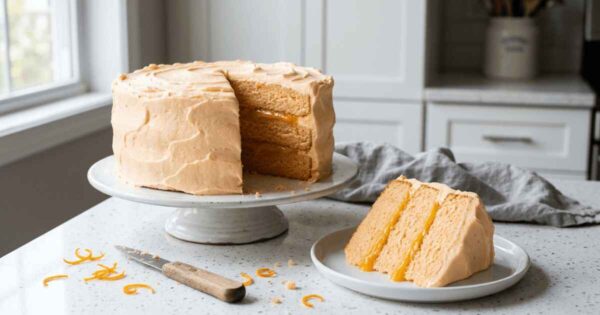
The first time I tried to make a curd-filled cake, the curd slid right out the side the second I sliced into it. I watched a very expensive amount of butter and orange juice run across my cutting board. Turns out you have to actually chill the curd until it’s stiff enough to hold a shape, not just “cold-ish,” which nobody tells you the first time around.
This orange dreamsicle cake fixes that mistake for you: three tender orange and vanilla bean layers, a proper set curd filling, and a whipped orange cream cheese frosting that’s lighter than a standard buttercream. If you’ve only ever had the dense, syrup-soaked poke-cake version of a creamsicle cake, this one is a different animal entirely.
Table of Contents
Key Takeaways
- This is a from-scratch, curd-filled orange dreamsicle cake, lighter and less sweet than a boxed-mix creamsicle cake.
- The orange curd needs about 2 hours to chill and firm up before you build the cake, so plan your timing around that.
- Vanilla bean paste (not extract) is used throughout for a cleaner, more floral vanilla flavor that doesn’t fight the orange.
- Works as a 3-layer 8-inch round cake or 24 cupcakes with the curd piped into the center.
Quick Glance
Prep Time: 50 minutes
Cook Time: 30 minutes
Chill Time: 2 hours 30 minutes
Total Time: about 4 hours
Servings: 14 slices
Difficulty: Beginner-Friendly
Cuisine: American
Why You’ll Love This Orange Dreamsicle Cake
- It’s genuinely lighter than a classic creamsicle cake. The whipped cream folded into the frosting keeps it from tasting like a sugar brick, and the curd adds tartness instead of more sweetness.
- No gelatin mix, no boxed cake mix, no shortcuts you have to apologize for. Every component is made from real ingredients you can name.
- The curd can be made two days ahead. That means assembly day is just cake, fold, frost, done.
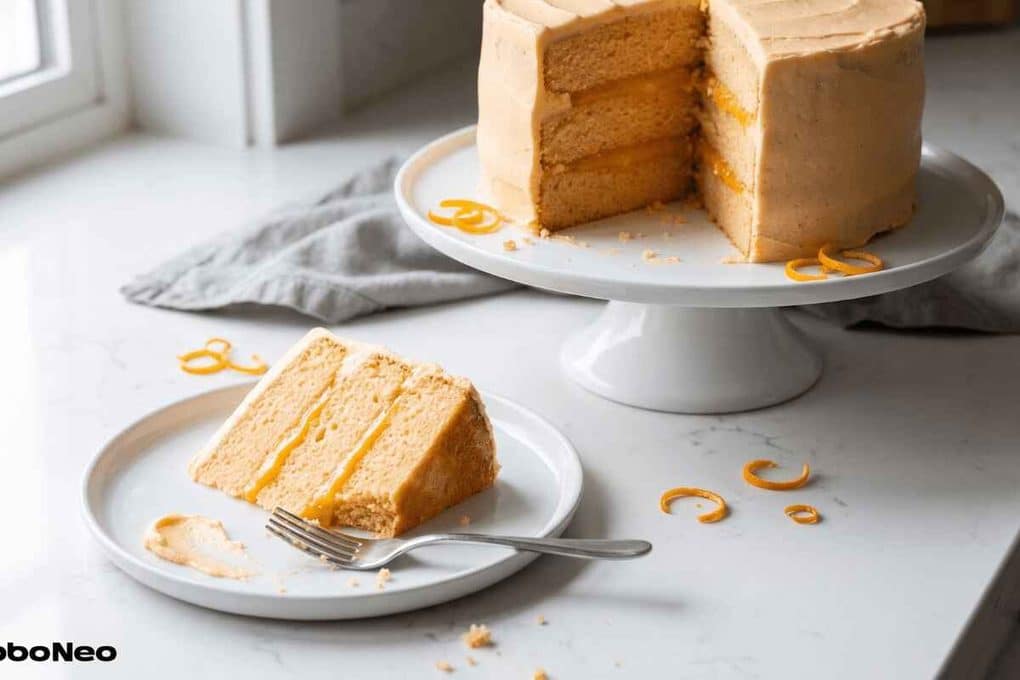
- It travels and slices cleanly once chilled. This isn’t a floppy poke cake. You get a real slice with visible curd layers.
- Beginner-forgiving. The trickiest step is stirring a pot, and I’ll tell you exactly what that should look like.
The Story Behind This Cake
I started making this after a birthday order fell through and I had three tubs of orange curd with nowhere to go. Instead of freezing it, I split a plain vanilla cake, dropped the curd in, and finished it with whatever frosting I had. It wasn’t supposed to become a regular recipe. Then my neighbor asked for it again for her daughter’s graduation, and I realized I’d never actually written the ratios down anywhere, so I had to rebuild the whole thing from memory and a lot of guessing.
Why This Recipe Works
We use cake flour instead of all-purpose because its lower protein content limits gluten development, which is what keeps this cake tender instead of chewy. We fold whipped cream into the cream cheese frosting instead of using it straight, because straight cream cheese frosting sets heavy and dense once chilled, and the whipped cream keeps it soft enough to cut without dragging the curd out of place. The curd itself is cooked to a firm set on the stove rather than left loose, since a runny curd will squeeze out from between the layers the moment you apply any pressure with a knife.
Ingredients
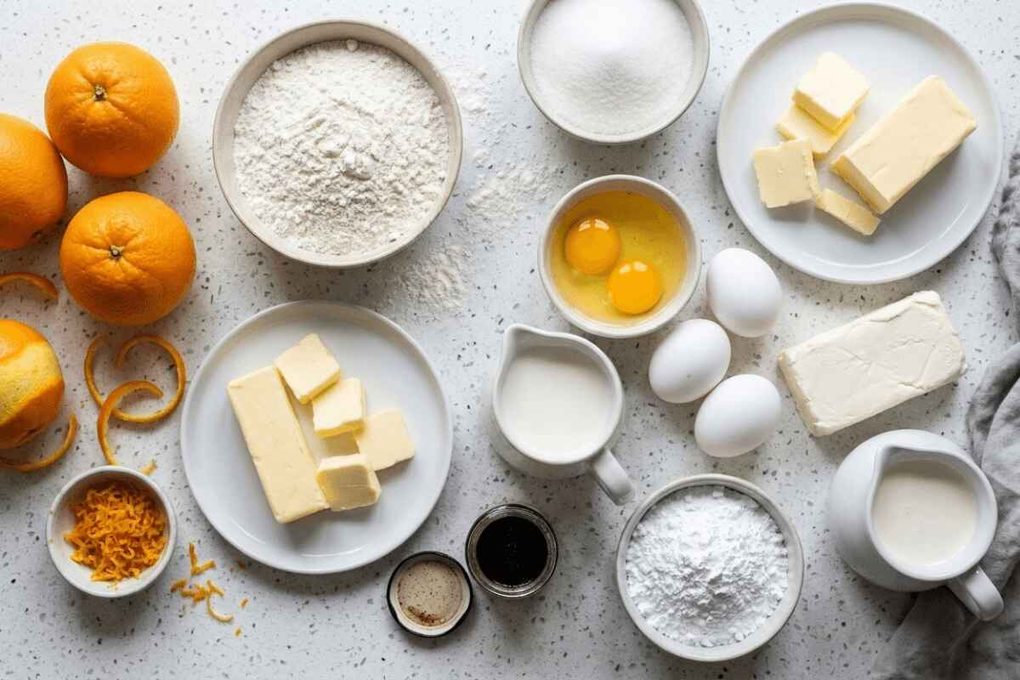
For the Cake
- 3 cups (340g) cake flour, sifted
- 2 1/2 tsp (10g) baking powder
- 1/2 tsp (3g) fine salt
- 1 3/4 cups (350g) granulated sugar
- 2 tbsp orange zest, from about 3 large navel oranges
- 1 cup (227g) unsalted butter, softened
- 4 large eggs, room temperature
- 1 cup (240g) whole milk, room temperature
- 1/2 cup (120g) fresh orange juice
- 2 tsp vanilla bean paste
For the Orange Curd
- 3/4 cup (180g) fresh orange juice
- 2 tbsp orange zest
- 3/4 cup (150g) granulated sugar
- 4 large egg yolks
- 2 large whole eggs
- 6 tbsp (85g) unsalted butter, cold and cubed
- pinch of fine salt
For the Whipped Orange Cream Cheese Frosting
- 16 oz (450g) cream cheese, softened
- 1 cup (227g) unsalted butter, softened
- 4 cups (480g) powdered sugar, sifted
- 1 tbsp orange zest
- 2 tbsp fresh orange juice
- 1 tsp vanilla bean paste
- pinch of fine salt
- 1 cup (240g) heavy cream, cold
Ingredient Notes
Cake flour: This is not the same as all-purpose flour. Look for it near the regular flour at most grocery stores, usually in a box rather than a bag. If you can’t find it, you can substitute 3 cups all-purpose flour minus 6 tablespoons, replaced with 6 tablespoons cornstarch, sifted together twice.
Vanilla bean paste: This gives you visible vanilla flecks and a rounder flavor than extract. It’s usually sold near the extracts and baking spices. If your store doesn’t carry it, vanilla bean powder works in the same amount.
Orange juice: Use fresh-squeezed for both the cake and the curd. Bottled juice tends to taste flat and slightly bitter once baked, and the curd especially depends on that fresh, bright flavor to hold its own against the sugar.
Instructions
Make the Cake Layers
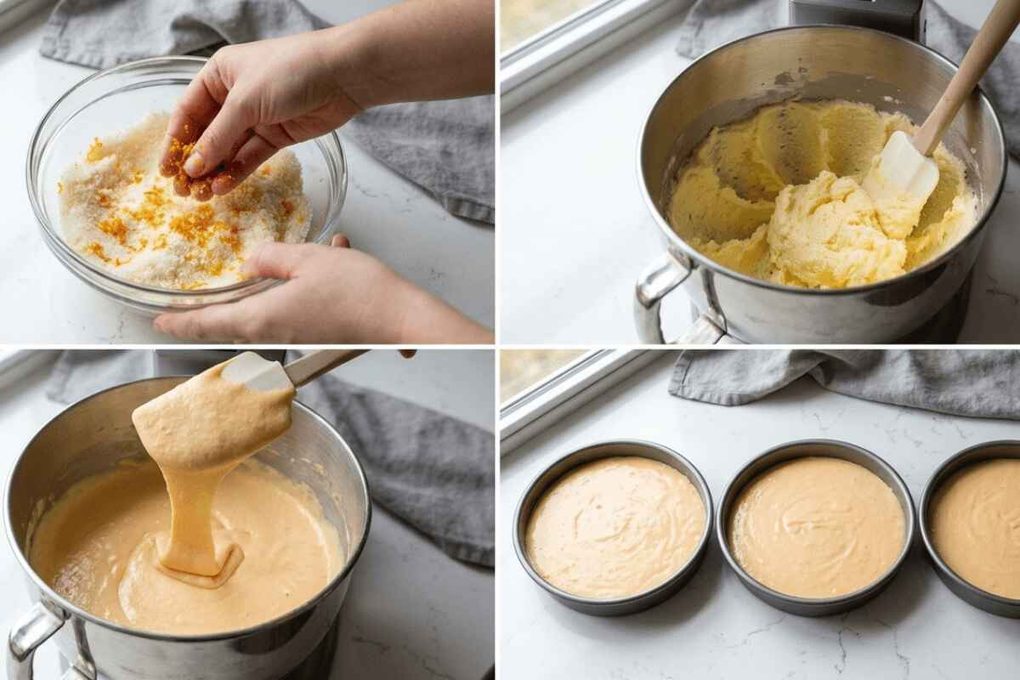
- Preheat the oven to 350°F (175°C). Grease three 8-inch round cake pans, line the bottoms with parchment rounds, then grease and flour the parchment too.
- Rub the zest into the sugar. Put the orange zest and sugar in a large bowl. Rub them together with your fingertips for about a minute, until the sugar looks damp and smells strongly of orange. This releases far more flavor than just dumping the zest in at the end.
- Cream the butter and orange sugar. Beat together on medium speed for 3 to 4 minutes, until pale and noticeably fluffier in volume. Don’t rush this step. It’s what gives the cake its lift.
- Add the eggs one at a time, beating well after each addition and scraping down the bowl between eggs.
- Whisk the cake flour, baking powder, and salt together in a separate bowl. In another cup, combine the milk, orange juice, and vanilla bean paste.
- Alternate adding the dry and wet mixtures to the butter mixture in three additions, starting and ending with the dry ingredients. Mix on low speed just until each addition disappears. If your stove-side timer is running long on other steps, this bowl can sit covered for up to 15 minutes without issue.
- Divide the batter evenly among the pans and smooth the tops. Bake for 26 to 30 minutes, until the tops spring back when lightly pressed. A toothpick inserted in the center should come out clean or with a few moist crumbs.
- Cool the layers in their pans for 10 minutes. Then run a knife around the edges and turn them out onto wire racks to cool completely before filling. A warm layer will melt the curd and frosting on contact.
Make the Orange Curd
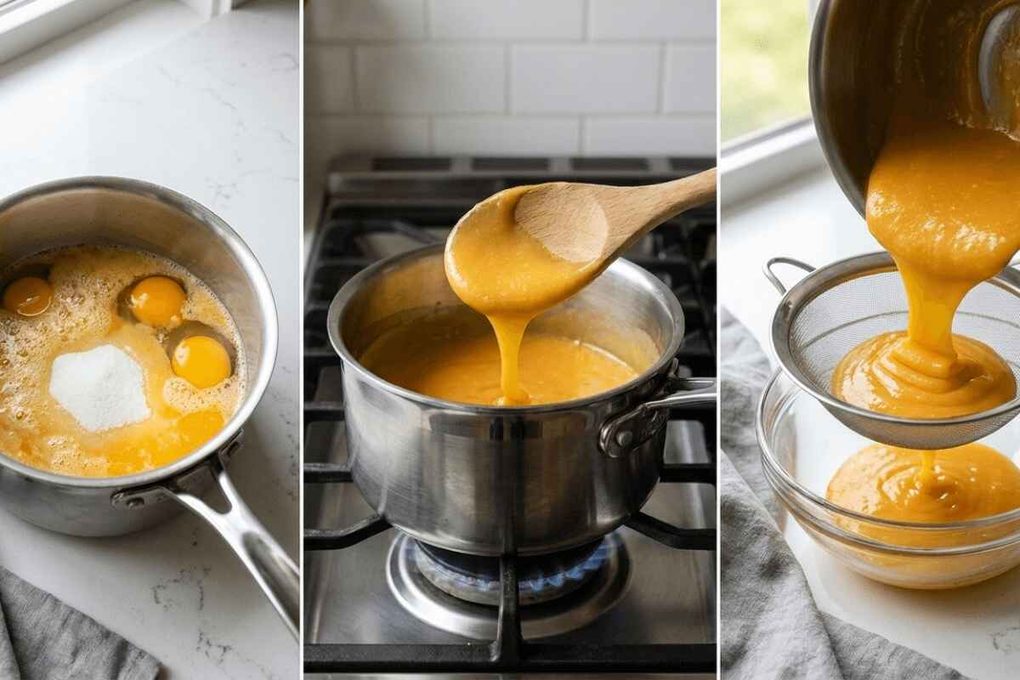
- Whisk the orange juice, zest, sugar, egg yolks, whole eggs, and salt together in a medium saucepan, off the heat, until smooth.
- Cook over medium-low heat, whisking constantly, for 8 to 10 minutes. The mixture will go from thin and foamy to noticeably thicker. It should coat the back of a spoon, so a line drawn through it with your finger holds its shape. According to the FDA, egg-based mixtures like this one should reach 160°F to be considered fully cooked (FDA egg safety guidance).
- Remove from heat and whisk in the cold butter, a cube or two at a time, letting each addition melt in before adding more. The curd will turn glossy and slightly lighter in color.
- Strain through a fine mesh sieve into a clean bowl to catch any bits of cooked egg or zest. Press a piece of plastic wrap directly onto the surface of the curd to stop a skin from forming. Refrigerate for at least 2 hours, or up to 2 days.
Make the Frosting and Assemble
- Beat the cream cheese and butter together until completely smooth with no lumps, about 2 minutes.
- Add the powdered sugar in two additions, mixing on low speed to avoid a sugar cloud. Then add the zest, orange juice, vanilla bean paste, and salt.
- In a separate bowl, whip the cold heavy cream to stiff peaks. Fold it into the cream cheese mixture in two additions, using a spatula and a gentle folding motion rather than the mixer. Stop as soon as no white streaks remain. Overmixing here will deflate the frosting and make it dense again.
- Level the cake layers with a serrated knife if they domed while baking.
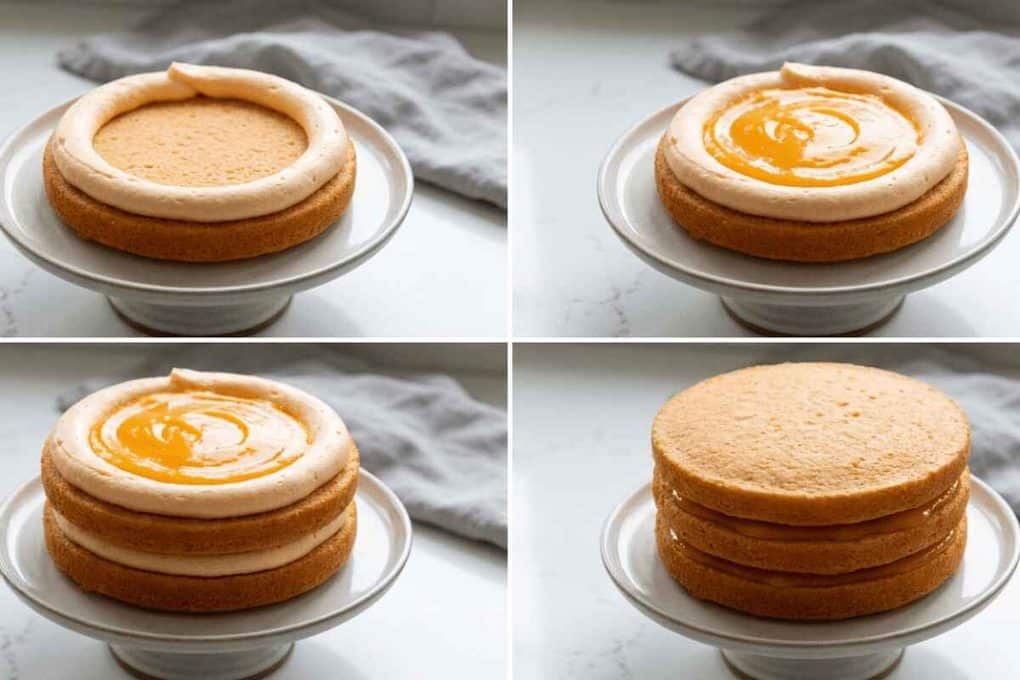
- Place the first layer on your serving plate or cake board. Pipe a thick ring of frosting around the outer edge to act as a dam. Fill the center with about a third of the chilled curd.
- Repeat with the second layer, then top with the third layer, flat side up.
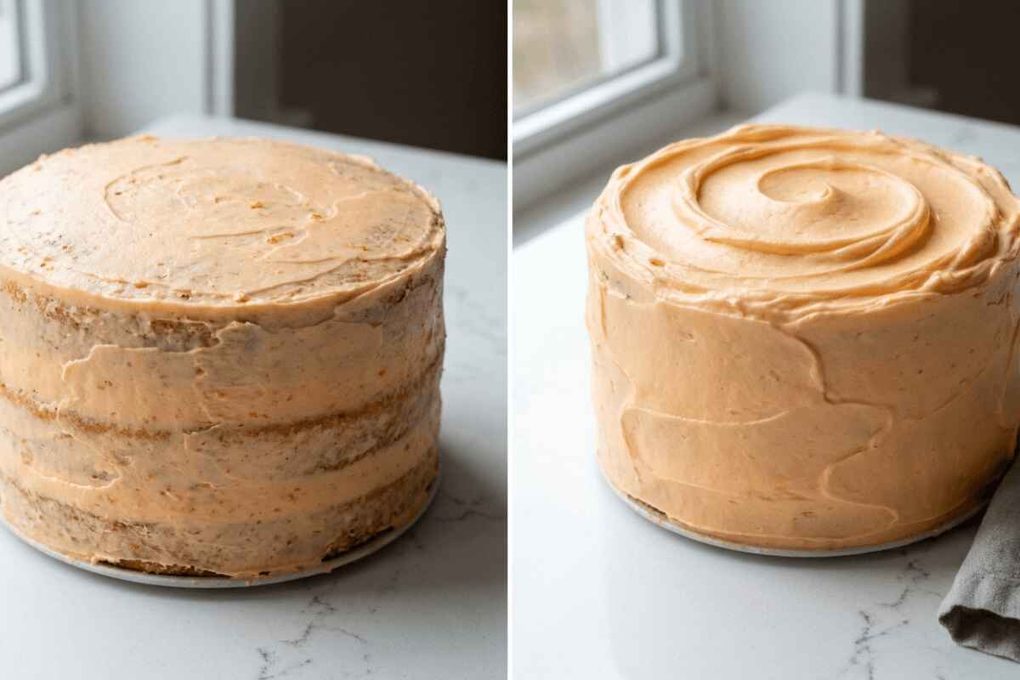
- Apply a thin crumb coat of frosting over the whole cake and refrigerate for 20 minutes before applying the final, thicker coat. This traps loose crumbs so your finished coat stays clean.
Tips for Perfect Orange Dreamsicle Cake Every Time
Zest before you juice. Once an orange is squeezed, the peel collapses and zesting it becomes nearly impossible.
Weigh your flour if you can. A cup of scooped cake flour can vary by up to 20 grams depending on how it’s packed, and that’s enough to make the difference between a tender crumb and a dry one.
Chill the curd properly, not just briefly. Two hours in the fridge, uncovered contact with plastic wrap, gets you a curd that holds its shape when sliced. Twenty minutes in the freezer does not.
Pipe the dam, don’t eyeball it. A proper frosting ring keeps the curd from bulging out the sides as the layers settle under their own weight.
Room temperature eggs mix in faster and smoother. If you forgot to set them out, submerge them in warm water for 5 minutes before cracking.
Common Mistakes to Avoid
❌ Curd leaking out the sides after slicing: This almost always means the curd wasn’t chilled long enough or the frosting dam wasn’t thick enough. Give it the full 2 hours and pipe a generous border.
❌ Dense, gummy cake layers: Usually caused by overmixing once the flour goes in. Mix only until the batter looks combined, then stop.
❌ Curd that tastes eggy instead of bright: This happens when the curd is cooked too hot, too fast, scrambling the eggs slightly. Keep the heat at medium-low and be patient with the 8 to 10 minute cook time.
❌ Frosting that slides off the cake: If your kitchen is warm, the butter and cream cheese can soften too much mid-assembly. Chill the whole cake for 15 minutes between coats.
Troubleshooting
My curd came out lumpy. Can I fix it? Yes. Push it through a fine mesh sieve while it’s still warm, pressing with the back of a spoon. This removes any small bits of scrambled egg and smooths it right out.
My frosting looks curdled after adding the cream. This usually means the cream cheese mixture was too cold when you folded in the whipped cream. Let it sit at room temperature for 5 minutes and fold again, gently.
Variations & Substitutions
Gluten-Free Version
Swap the cake flour for a 1:1 gluten-free baking blend that contains xanthan gum. The texture will be slightly denser but still tender. The curd and frosting are naturally gluten-free as written.
Cupcake Version
This batter makes about 24 cupcakes. Fill liners two-thirds full and bake at 350°F for 16 to 18 minutes. Once cooled, core out the center with a small knife or cupcake corer and pipe in a spoonful of curd before frosting.
Ingredient Substitutions
Cake flour → all-purpose flour minus 6 tablespoons per 3 cups, with 6 tablespoons cornstarch added (use same total amount). Slightly denser crumb, still acceptable.
Fresh orange juice → high-quality refrigerated (not shelf-stable) orange juice (use same amount). Noticeably less bright, best used only in the cake batter, not the curd.
Vanilla bean paste → vanilla bean powder (use same amount). Nearly identical flavor, no visible flecks.
Cream cheese → mascarpone (use same amount). Softer set frosting, keep the cake refrigerated until close to serving.
How to Store Orange Dreamsicle Cake
Room Temperature
Because of the cream cheese frosting and egg-based curd, this cake should not sit at room temperature for more than 2 hours total.
Refrigerator
Store covered in the refrigerator for up to 4 days. The flavor actually improves on day two, once the curd has had time to settle into the layers.
Freezer
Freeze unfrosted, curd-filled layers wrapped tightly in plastic for up to 2 months. Thaw overnight in the refrigerator before frosting. The finished, frosted cake can also be frozen whole for up to 1 month; thaw it in the refrigerator for 24 hours before serving.
Make-Ahead Instructions
You can make the curd up to 2 days ahead and the cake layers 1 day ahead, wrapped tightly and left at room temperature. The frosting can be made a day ahead and refrigerated; let it sit out for 20 minutes and re-whip briefly before using.
Frequently Asked Questions
Nutrition Information
Per serving (1 of 14 slices): Calories 495 | Total Fat 28g | Saturated Fat 17g | Cholesterol 145mg | Sodium 210mg | Total Carbohydrates 56g | Dietary Fiber 1g | Sugars 42g | Protein 6g
Nutrition information is estimated using an online food database and is provided as a courtesy only. Actual values may vary based on specific ingredients used.
More Easy Orange Dessert Recipes You’ll Love
- The Best Orange Creamsicle Cake Recipe
- Mandarin Orange Cake
- Orange Creamsicle Poke Cake
- No-Bake Orange Creamsicle Cheesecake
If you make this orange dreamsicle cake, I’d love to hear how the curd turned out for you. Did the layers hold together the way you hoped, or did you run into the same slippery curd problem I did the first time? Leave a comment and a star rating below. It genuinely helps other beginners find this recipe when they’re standing in their kitchen wondering if their curd is thick enough yet.
Print
Easy Orange Dreamsicle Cake
- Total Time: 3 hours 15 minutes
- Yield: 12 servings
- Diet: Vegetarian
Description
A bright and tender orange layer cake made with fresh orange juice and zest, filled with silky homemade orange curd and finished with whipped orange cream cheese frosting.
Ingredients
FOR THE CAKE
3 cups (340g) sifted cake flour
2 1/2 teaspoons (10g) baking powder
1/2 teaspoon (3g) fine salt
1 3/4 cups (350g) granulated sugar
2 tablespoons orange zest, from about 3 large navel oranges
1 cup (227g) unsalted butter, softened
4 large eggs, room temperature
1 cup (240g) whole milk, room temperature
1/2 cup (120g) fresh orange juice
2 teaspoons vanilla bean paste
FOR THE ORANGE CURD
3/4 cup (180g) fresh orange juice
2 tablespoons orange zest
3/4 cup (150g) granulated sugar
4 large egg yolks
2 large whole eggs
6 tablespoons (85g) unsalted butter, cold and cubed
Pinch of fine salt
FOR THE WHIPPED ORANGE CREAM CHEESE FROSTING
16 oz (450g) cream cheese, softened
1 cup (227g) unsalted butter, softened
4 cups (480g) powdered sugar, sifted
1 tablespoon orange zest
2 tablespoons fresh orange juice
1 teaspoon vanilla bean paste
Pinch of fine salt
1 cup (240g) heavy cream, cold
Instructions
1. Preheat oven to 350°F (175°C). Grease three 8-inch round cake pans, line the bottoms with parchment, then grease and flour the parchment.
2. Rub the orange zest into the granulated sugar until the sugar becomes damp and fragrant. Beat the orange sugar with softened butter for 3–4 minutes until pale and fluffy.
3. Add the eggs one at a time, beating well after each addition and scraping the bowl as needed.
4. Whisk the cake flour, baking powder, and salt in one bowl. In another, combine the milk, orange juice, and vanilla bean paste.
5. Add the dry and wet mixtures to the butter mixture in three alternating additions, beginning and ending with the dry ingredients. Mix on low just until combined.
6. Divide the batter evenly between the prepared pans and smooth the tops. Bake for 26–30 minutes, until the cakes spring back lightly and a toothpick comes out clean or with a few moist crumbs.
7. Cool the cakes in their pans for 10 minutes. Turn them onto wire racks and allow them to cool completely.
8. For the curd, whisk orange juice, zest, sugar, egg yolks, whole eggs, and salt together in a saucepan while cold.
9. Cook over medium-low heat, whisking constantly for 8–10 minutes, until thick enough to coat the back of a spoon.
10. Remove from heat and whisk in the cold butter a few pieces at a time until smooth and glossy.
11. Strain the curd into a clean bowl. Press plastic wrap directly onto the surface and refrigerate for at least 2 hours.
12. For the frosting, beat the softened cream cheese and butter until smooth, about 2 minutes.
13. Gradually mix in the sifted powdered sugar. Add orange zest, orange juice, vanilla bean paste, and salt, then mix until smooth.
14. Whip the cold heavy cream separately until stiff peaks form. Gently fold it into the cream cheese mixture in two additions until no streaks remain.
15. Trim the cake layers if needed. Place the first layer on a serving plate and pipe a thick frosting border around the edge.
16. Spread about one-third of the chilled orange curd inside the frosting border. Add the second cake layer and repeat with frosting and curd, then place the final layer on top.
17. Cover the entire cake with a thin crumb coat and refrigerate for 20 minutes. Finish with the remaining frosting and decorate as desired.
Notes
Use fresh-squeezed orange juice for the brightest flavor.
Cake flour gives the layers a lighter, softer crumb.
Chill the orange curd completely before assembling the cake.
Keep the heavy cream cold so the frosting stays light and fluffy.
For an all-purpose flour substitute, use 3 cups all-purpose flour minus 6 tablespoons and replace those 6 tablespoons with cornstarch. Sift the mixture twice.
- Prep Time: 45 minutes
- Cook Time: 30 minutes
- Category: Dessert
- Method: Baked
- Cuisine: American
Nutrition
- Serving Size: 1 slice